

Most museums in India have the same quiet problem. The collection is wonderful, but only the people who manage to walk through the door ever see it. School groups from other cities, researchers abroad, older visitors who can't manage long galleries, tourists still deciding whether to make the trip - they all stay outside.
A 360° virtual tour changes that. It lets anyone walk through your galleries on their phone or laptop, stop at an exhibit, look up at the ceiling, read the information panel and move on to the next hall, at their own pace.
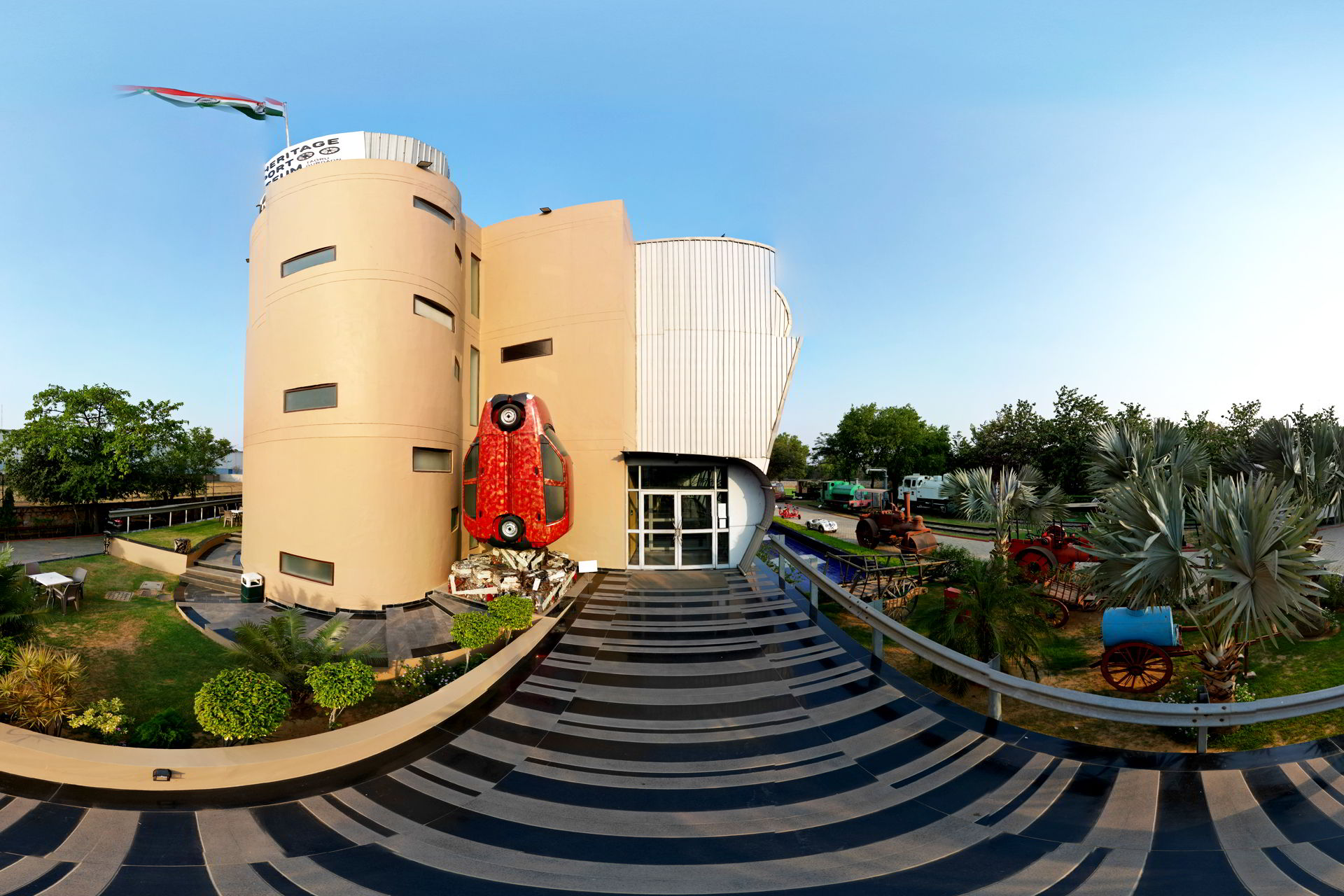
We've shot museums and heritage spaces in Delhi NCR and abroad, including the Heritage Transport Museum in Manesar, Afsana - The Story of Red Fort in Delhi, and the Sant Nirankari Museum at the Nirankari Sarovar Complex. Here's what we've learned about making a museum tour that people actually enjoy using.
Who uses a museum virtual tour?
When we talk to museum teams, they usually think of the tour as something for "online visitors" in general. In practice it's a few clear groups:
- Schools and colleges that want to prepare students before a visit, or can't arrange a trip at all. A teacher can open the tour on a classroom screen and walk the class through a gallery.
- Tourists planning a trip to Delhi, Gurugram or anywhere else. They want to know if the museum is worth half a day, how big it is, and what they'll see.
- Researchers, collectors and enthusiasts who want to look closely at specific objects, models or murals.
- Visitors who can't easily come - elderly people, people with mobility issues, and families living abroad.
- Sponsors, trustees and partners who want to see the space, a new gallery or a renovation without travelling.
What makes a museum shoot different
Shooting a museum is not like shooting a hotel lobby. A few things need extra care.
Glass cases and reflections
Many exhibits sit behind glass, and glass reflects everything - lights, windows, the camera itself. We plan camera positions to keep reflections to a minimum and take several exposures at each point, so the object inside the case is clear and the bright spots don't take over.
Low and mixed lighting
Museums are often dim on purpose, to protect artefacts and set a mood. Spotlights on exhibits, darker corridors and daylight from windows all sit in the same frame. Bracketed exposures help us keep the atmosphere without losing detail in the shadows.
No flash, no touching
We don't use flash near sensitive objects, and we don't move anything. If an exhibit needs to be shifted or a barrier removed for a better view, the museum team does it, not us.
Large objects and tight spaces
A transport museum has vintage cars and rail coaches. A heritage gallery may have narrow passages and small rooms. We place points so that big objects can be seen fully, and small rooms don't feel cramped or distorted.
Shooting around visitors
We usually shoot before opening hours or on a closed day, so galleries are empty and we don't disturb anyone. If a few visitors do appear in a frame, we blur their faces.
What a good museum tour includes
A tour works best when it follows the route a real visitor would take. Typically that means:
- The entrance and ticket area, so people recognise the building when they arrive.
- Each gallery, in the order the museum intends them to be seen.
- Close views of key exhibits, the ones people come to see.
- Outdoor displays, gardens or courtyards, if there are any.
- Facilities - the café, the shop, washrooms, ramps and lifts. This is the part that helps elderly visitors and families decide.
Inside the tour we can add information points: a short write-up on an exhibit, a photo of an object from a different angle, an audio note, a link to buy tickets, or a link to your website. This is where a tour stops being a set of panoramas and starts to feel like a guided visit.

Heritage sites and monuments
The same approach works for heritage buildings, forts, havelis and historic campuses, not just indoor galleries. For these, the outside matters as much as the inside - the gateway, the courtyards, the façade and the views. Some sites are best covered with a mix of ground-level 360° photos and aerial shots. You can see examples on our historical place 360° samples page.
If your heritage site is also a place of worship, we follow the same respectful approach we've described in our post on 360° virtual tours for temples.
Where the tour gets seen
- Your website, ideally on the home page or a "Visit" page, so planners see it right away.
- Google Maps and Google Search, linked to your Google Business Profile. When someone searches for your museum, they can step inside straight from the listing. We've explained the process in our guide to adding a 360° tour to a Google Business Profile, and our Google Street View tours start at Rs 25,000.
- Schools and education partners, as a link they can share with teachers and students.
- Social media and WhatsApp, especially for new galleries or special exhibitions.
- VR headsets at events, exhibitions and tourism fairs, where people can "visit" without being there.
Tours for temporary exhibitions
Temporary exhibitions are a great use case that museums often miss. Once the exhibition closes, the space is dismantled and the effort is gone. A 360° tour keeps a permanent record that can be shared for years. We've done this for exhibitions like the Nirankari exhibitions at the Annual Samagam in Samalkha, and the same idea works for art shows, trade expos and museum exhibitions.
For guided walkthroughs, talks or live events inside the museum, 360° video is a good companion to the still tour.
How long does it take?
The on-site shoot usually takes 6 to 8 hours per location, planned around your opening hours. Editing, blurring and building the tour then takes about 6 to 10 days, depending on the number of galleries and how many information points you want to add. Larger museums with many halls may need more than one shoot day.
Common questions from museum teams
Will the shoot disturb our visitors?
We prefer to shoot before opening or on a closed day. If that isn't possible, we work gallery by gallery with a small team.
Can we keep some galleries or objects out of the tour?
Yes. You decide what goes in. Some museums leave out storage areas, conservation labs or objects with photography restrictions.
Can visitors zoom in on exhibits?
They can look around freely and zoom within each panorama. For objects that deserve a closer look, we add an info point with a detailed photo and description.
Do you shoot outside Delhi NCR?
Yes. We take up museum and heritage projects across India, and we've also shot abroad, including the Lindt Chocolate Factory in Zurich.
Can the tour be updated later?
Yes. When a gallery changes or a new section opens, we can re-shoot just that part and add it to the existing tour.
Open your museum to everyone
If you run a museum, gallery or heritage site and want more people to discover it, we'd be glad to visit, understand your collection and suggest how the tour should flow. Take a look at our 360° virtual tour services, then get in touch or WhatsApp us on +91 99998 96100.