

Think about the people who love a temple but can't easily get there. The family that moved to Canada fifteen years ago. The grandmother in Rohini whose knees won't manage the stairs anymore. The NRI who wants to show his kids the place where his parents got married.
That's really what a 360° virtual tour of a temple is about. It's not a gimmick or a tech showpiece. It lets someone in Toronto, or someone sitting at home in Rohini with bad knees, stand in front of the sanctum and look around - the murtis, the carvings, the mandap, the courtyard - whenever they want.
We've shot temples and spiritual places across Delhi and North India, including the Usha Mata Mandir in Sarai Rohilla. Here's what we've learned about doing it well, and respectfully.

Who actually uses a temple virtual tour?
More people than you'd expect. Usually it's:
- NRI families who grew up visiting the temple and now live in the US, Canada, UK, Australia or the Gulf. For them it's a way to stay connected, and to show their children where the family prays.
- Elderly and unwell devotees who can't make the trip, especially to temples with long staircases or hill locations.
- First-time visitors and pilgrims planning a trip. They want to know the layout, where to park, where to leave footwear, and what to expect inside.
- Donors and trustees who want to see new construction or renovation work.
- Students, historians and tourists interested in architecture and heritage.
What a good temple tour includes
Every temple is different, but a tour usually follows the path a devotee would walk:
- The main gate or entrance, so people recognise the place from the street.
- The courtyard and parikrama path.
- The main mandap or prayer hall.
- The sanctum, with a clear, well-lit view of the deities (only where the temple permits it).
- Smaller shrines within the complex.
- Facilities like the langar or bhandara hall, the footwear counter, parking and accessibility ramps.
Inside the tour you can add information points - the history of the temple, aarti timings, festival dates, a donation link, or a short audio of a bhajan. These small touches make it feel like a visit rather than just a set of photos.
Doing it respectfully - the part that matters most
This is where temple shoots are different from shooting a hotel or a showroom. A few things we always do:
- Ask first, and follow the committee's rules. Some temples don't allow photography of the garbhagriha, or only at certain times. That's their call, always.
- Shoot at quiet hours. We usually work early morning or after the evening aarti, so we don't disturb anyone's prayer and so the space is clear.
- Footwear off, and the team briefed. Simple, but it matters.
- Blur faces of devotees who appear in the frame. People come to pray, not to end up on the internet.
- Capture the real colours. Temples are full of gold, marigold, vermilion and diya light. We take several exposures at every point so the deity is clear and the bright lamps don't wash everything out.
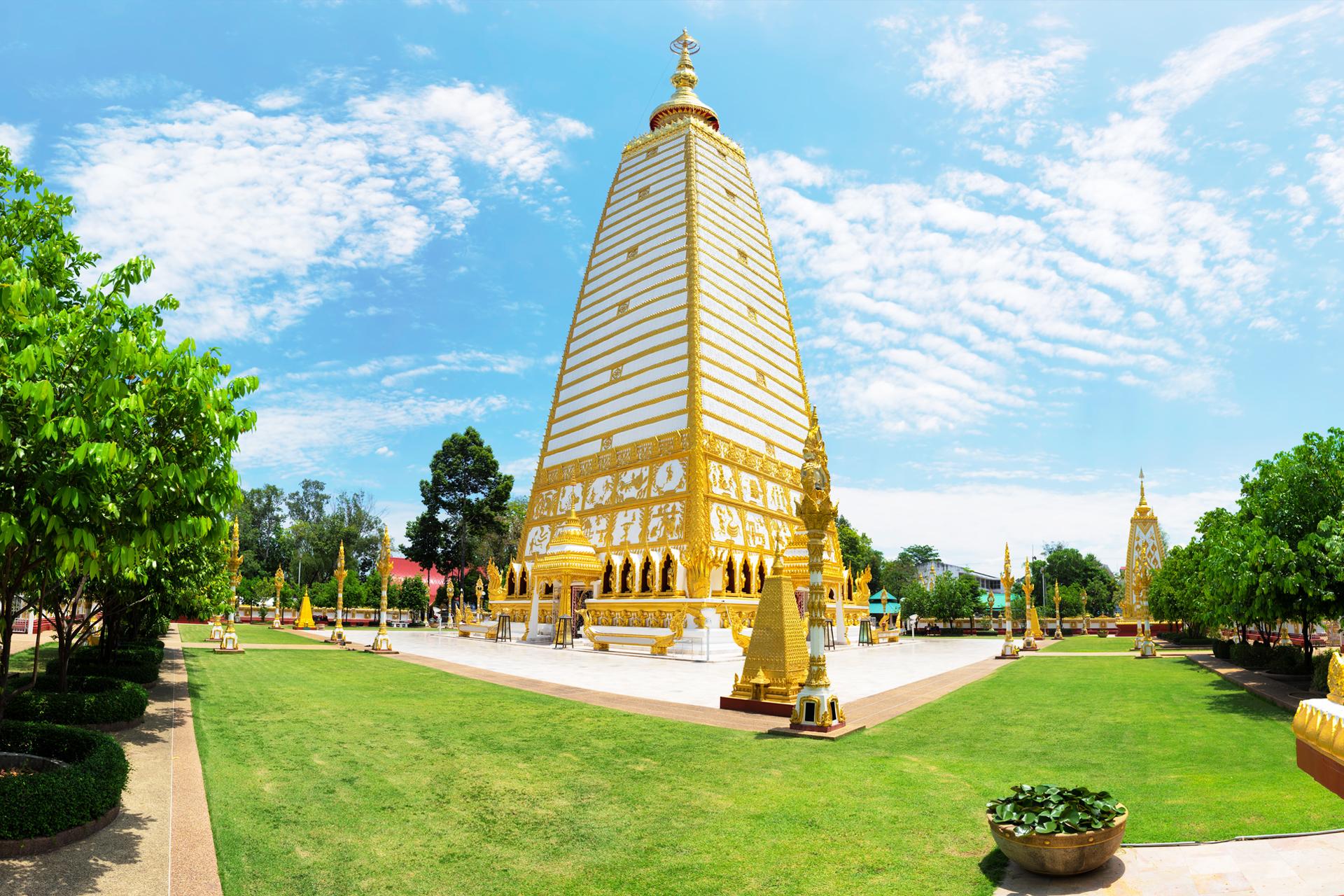
Where the tour gets seen
Once it's ready, the same tour can go in several places:
- The temple's website, as the centrepiece of the home page.
- Google Maps, attached to the temple's Google listing, so anyone searching for it can walk in virtually. We've written a separate guide on adding a 360° tour to a Google Business Profile.
- WhatsApp groups and social media, which is honestly where most devotees will open it.
- Festival updates - some temples re-shoot the decorated mandap during Navratri, Janmashtami or Diwali so people abroad can see it.
A note on 360° video and live darshan
A virtual tour is made of still panoramas, which is perfect for exploring the space anytime. For aarti, kirtan or festival celebrations, 360° video works better because people can see and hear the moment as it happens around them. Many temples use both - a tour for the space, and 360° videos for special occasions.
How long does it take?
For a typical temple complex, the on-site shoot takes around 6 to 8 hours, planned around darshan timings. Editing, blurring and building the tour then usually takes 6 to 10 days, depending on the size of the complex and how many information points you want inside it.
Common questions from temple committees
Will the shoot disturb devotees?
We plan it around your timings, usually early morning or late evening, and work quietly with a small team so prayers carry on as normal.
Can we exclude certain areas?
Of course. You decide exactly what goes in the tour and what stays out.
Can we add donation or contact details?
Yes. We can add buttons or info points that link to your donation page, contact number, or WhatsApp.
Do you shoot gurudwaras, churches, mosques and other places of worship too?
Yes. We follow the customs of each place, and the approach is the same - respect first, then the camera.
Do you travel outside Delhi?
Yes, we take up projects across India.
Let your devotees visit from anywhere
If your temple committee is thinking about it, we'd be happy to visit, understand your rules and suggest what the tour should include. Get in touch or WhatsApp us on +91 99998 96100.